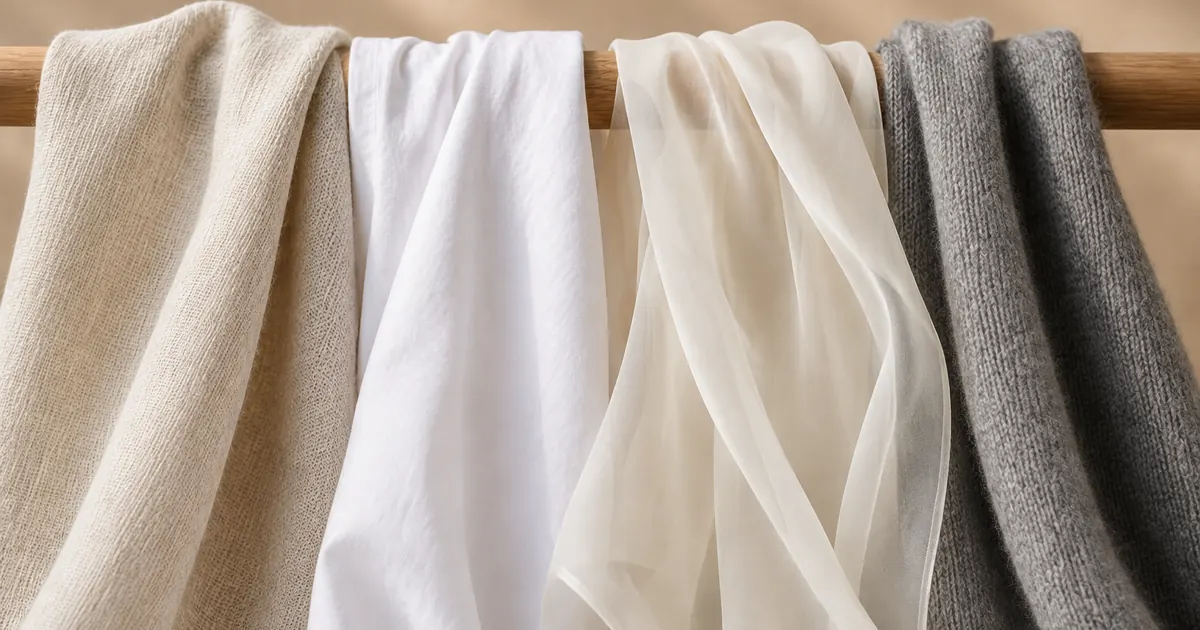
"Breathable" is the most used and least defined word in clothing marketing. Technically it means one thing: how well a fabric lets moisture vapor — your sweat — escape. Practically it decides whether you are comfortable at a July farmers market or a stuffy airplane. Here is a plain-English guide to the five fabrics in our current collection, what each does best, and how to combine them.
Linen: The Champion
Flax fibers are hollow, which makes linen the most breathable common fabric — it wicks moisture and dries faster than anything else on this list. It also insulates in cool weather, which is why linen works from May through October. The trade-offs: wrinkles are guaranteed, and the texture softens over years rather than staying silky. Our linen pants are pre-washed midweight — substantial enough to not be see-through, light enough for heat waves. Wear linen when the temperature passes 75°F and you will not regret it.
Cotton: The All-Rounder
Cotton breathes well and absorbs moisture, though it dries slower than linen — a soaked cotton tee stays wet. Its superpower is versatility: cotton takes dye beautifully, machines wash without drama, and softens endlessly. Cotton-blend weaves (our utility jackets, sweatpants) add durability and stretch recovery. Cotton is the right call for everyday pieces that face real laundry routines.
Chiffon: The Featherweight
Chiffon is a plain-weave polyester or silk with air between the threads — technically a synthetic, but among the most breathable fabrics by airflow because it is nearly all holes. It weighs almost nothing, dries in under an hour, and floats rather than clings. Our chiffon kimonos are the proof: a layer that adds coverage without a single degree of warmth. Chiffon is the answer when you want a layer in summer — the season cardigans cannot survive.
Wool Blends: The Surprise
Wool in summer sounds wrong, but lightweight wool is the original breathable performance fiber — it insulates, wicks, and resists odor for days. In our collection, wool appears blended into the cotton-wool cardigan, where a small wool percentage adds warmth without weight and the cotton-acrylic majority keeps it machine-washable. Wool blends are the cool-weather bookend to linen.
Recycled Polyester: The Performer
Polyester gets a bad reputation for breathability that older weaves earned. Modern lightweight recycled polyester — used in our windbreakers — is a shell fabric: its job is blocking wind and rain, not wicking sweat. Worn over a breathable base layer, it extends the seasons of everything you own. The honest rule: synthetics for shells and stretch pieces, naturals for anything that sits against skin in heat.
The Combination Strategy
The most comfortable warm-weather outfit is a system: linen or cotton against skin, chiffon over it, synthetic shell only when weather demands. A linen tee under a chiffon kimono handles 90°F with grace. Cotton joggers plus a wool-blend cardigan handle a 55°F morning. Every piece in the store is designed to layer with the others — that is the quiet advantage of a curated collection over a random closet.
Reading a Fiber Label
Percentages tell you behavior: over 50% linen means real linen character; 1–3% elastane means stretch recovery without suffocating the natural fiber; "polyester" on a shell is fine, on a summer tee is a red flag. Every product page here lists full fiber content — because fabric is the purchase, and the style is just the shape it comes in.
Humidity: The Real Test
Dry heat flatters every fiber; humidity separates them. In wet heat, linen is unbeatable — it wicks and dries fast enough to feel air-conditioned. Cotton holds sweat longer but still breathes; avoid heavy cotton denim on humid days. Chiffon floats rather than touching skin, which feels cooler than any measurement suggests. Synthetics trap odor fastest in humidity, which is why our performance pieces are shells and layers rather than base layers.
If you dress for one climate, match it: hot-humid means linen-first, hot-dry means cotton-first, variable means blends. The linen collection exists for exactly the first case.
Care Differences That Matter
Breathable natural fibers need slightly different care than synthetics, and mixing them up shortens garment life. Linen and cotton tolerate machine washing but prefer cold and hate high dryer heat — the fibers brittle. Wool blends need the gentlest cycle and flat drying. Chiffon needs a mesh bag but dries in minutes. Recycled polyester tolerates everything except hot irons, which melt it.
A practical laundry sort for this collection: one load for linens and cottons (cold, gentle), one for knits (mesh bag, flat dry), and shells washed rarely, spot-cleaned between. Fifteen minutes of sorting adds years to the wardrobe — the full routines live in our linen care guide.
Build your layers from the fabric-first collections — everything ships free, tax free, with 30-day returns.


