Linen is one of the oldest fibers in clothing and one of the most misunderstood. People either fear it — "it wrinkles!" — or mistreat it, tossing it into hot dryers until the fibers crack. The truth is that linen is one of the longest-lasting fibers you can buy: linen garments from decades ago are still in circulation, getting softer with every year. Here is how to keep the linen pieces in our Pants & Shorts collection and beyond looking lived-in, not worn-out.
Wash Cold, Gentle, and Often Enough
Linen actually benefits from frequent washing — the fibers soften and relax with each cycle. Wash in cold water on the gentle cycle, with like colors. Skip the chlorine bleach entirely; it weakens flax fibers. A mild liquid detergent dissolves cleaner than powder in cold water and leaves less residue on the weave.
One habit matters more than any other: close zippers and fasten buttons before washing. A loose zipper abrades linen in the drum like sandpaper. Wash kimonos and blazers inside-out to protect the outer face of the fabric.
The Drying Decision
Here is where most linen gets ruined. High heat makes flax fibers brittle — they snap, pill, and shrink. Your options, best to worst:
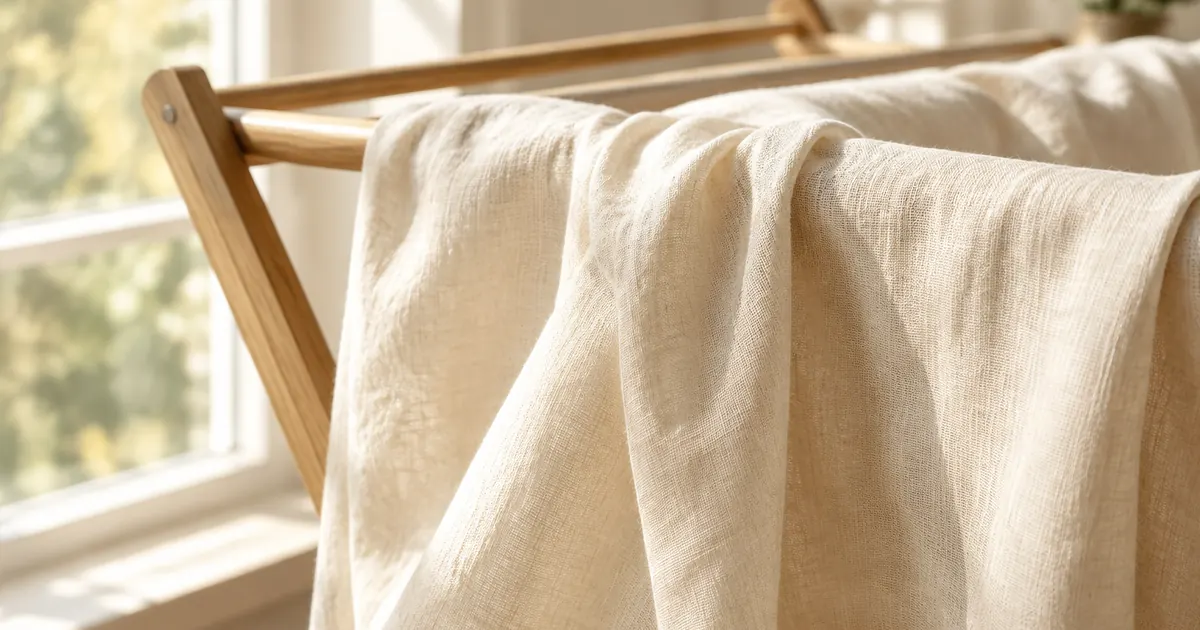
- Hang dry — the best choice. Linen dries remarkably fast, often in a few hours indoors. Shake the garment out firmly before hanging; that snap removes most wrinkles before they set.
- Dry flat — for heavy pieces like unlined blazers, flat drying prevents shoulder bumps.
- Tumble dry low, briefly — acceptable in a pinch. Pull the garment while slightly damp and finish by hanging. Never high heat.
Our wide-leg linen pants come pre-washed, so the first-laundering shrinkage you might fear is already behind them.
Wrinkles: Embrace or Erase
Linen's crepe-like wrinkling is part of its charm — the relaxed drape signals real fabric, not polyester pretending. But for pieces you want crisper, two tricks work: pull garments taut immediately after the wash cycle while damp, and iron while damp on medium heat with steam (or use a hand steamer, which is gentler and travel-friendly). Ironing bone-dry linen scorches the fibers and takes twice the effort.
A word of honesty: if a wrinkle-free life matters more than breathability, linen is the wrong fiber. But nothing else feels like linen in July heat — the hollow flax fibers wick moisture and dry in minutes.
Stain Response
Blot spills immediately — linen absorbs fast, which is why it feels cool and also why stains set quickly. Cold water and a drop of dish soap lift most food stains; work it in with your fingers, rinse, repeat. For oil stains, a sprinkle of cornstarch left for an hour absorbs the grease before washing. Never rub hard — that breaks the fibers locally and leaves a permanent light patch.
Storage Between Seasons
Store linen clean — body oils attract moths and set into yellow patches over a summer in the closet. Fold rather than hang for pants and knits; hang blazers on broad wooden hangers to keep the shoulders shaped. A cedar block in the drawer handles moths without chemical smells. Never seal linen in plastic bins; trapped moisture yellows fabric. A breathable cotton bag or a slatted shelf is right.
The Long Game
Travel Notes: Packing Linen
Linen is the best-traveling fabric when you use its weaknesses as features. Roll rather than fold it into a suitcase — rolled linen creases in soft waves instead of sharp lines, and the waves shake out. If a piece arrives compressed, hang it in the bathroom during a hot shower; the steam relaxes the fibers in minutes. Our wide-leg linen pants are a flight favorite for exactly this reason: comfortable for hours in a seat, presentable on arrival, and they pair with everything else in a carry-on.
For long trips, pack one linen piece per three days of wear — linen resists odor better than cotton, and a cold-water sink wash dries overnight in most hotel rooms.
Reading Linen Quality Before You Buy
Not all linen is equal, and the differences are visible if you know where to look. Hold the fabric to light: better linen has a denser weave with fewer slubs per inch — those little knots are part of linen's character, but a fabric that is mostly slub will pill and thin fast. Check the selvedge edge; a hemmed, finished edge signals a garment meant to last. Weight matters too: midweight (around 150–200 GSM) is the versatile choice, heavy enough for coverage, light enough for heat. Our linen blazer and pants are cut from midweight cloth for exactly that balance.
Color depth is another tell. Well-dyed linen shows even, saturated color through the weave; cheap dye sits on the surface and fades in streaks. Rub the fabric briskly for a few seconds — if color transfers to your hands, the dye will not survive a season.
Cared for this way, linen does something rare: it improves. The drape relaxes, the texture softens, and a good pair of linen pants at year three feels better than it did new. That is the quiet case for natural fibers — they age into favorites instead of aging out of style. Every linen piece on this store ships free, tax free, with 30-day returns to make sure the fit is right before the years of wear begin.


